
Democratic Peoples Republic Of Korea
East Asia Korean
The culture of the Democratic People's Republic of Korea is characterized by its unique blend of traditional Korean customs and the influence of Juche ideology, which emphasizes self-reliance and nationalism.
Historical Context
North Korea's culture has been shaped by its history of Japanese occupation, the Korean War, and its subsequent isolation under a communist regime.
Migration Patterns
Limited due to strict government control, with some defectors moving to South Korea and other countries.
Conflict And Resilience History
The Korean War and ongoing tensions with South Korea and the international community have fostered a culture of resilience and self-reliance.
Diaspora Perspectives
North Korean defectors often face challenges integrating into new societies, bringing unique perspectives on freedom and identity.
Regional Variations
Cultural practices can vary slightly between urban centers like Pyongyang and rural areas, though the government promotes a unified cultural identity.
Bridging Notes
Efforts to bridge cultural gaps focus on humanitarian aid and cultural exchanges, though these are limited by political tensions.
Spiritual And Religious Practices
Officially atheist, with some traditional Korean shamanistic practices persisting in private.
Beliefs And Worldview
Influenced by Juche ideology, emphasizing self-reliance, nationalism, and loyalty to the state.
Cultural Proverbs Sayings
Proverbs often reflect themes of perseverance, loyalty, and collective effort.
Naming Conventions And Terms Of Address
Names typically follow the Korean tradition of a family name followed by a given name, with respectful terms of address used in formal settings.
Health And Mental Health
Healthcare is state-provided, with traditional medicine still practiced alongside modern treatments.
Mental Health Views
Mental health is often stigmatized, with limited resources available for treatment.
Traditional Healers
Traditional Korean medicine, including herbal remedies and acupuncture, is commonly used.
Gender Roles In Healthcare
Healthcare roles are traditionally gendered, with women often serving as primary caregivers.
Healthcare Barriers
Limited resources and international sanctions impact the availability and quality of healthcare services.
Education And Learning Styles
Education is state-controlled, focusing on ideological indoctrination alongside academic subjects.
Learning Styles
Emphasis on rote memorization and collective learning experiences.
Parental Engagement
Parents are expected to support the state's educational goals, often participating in school activities and community events.
Family And Social Structure
Family units are central, with a strong emphasis on respect for elders and collective family honor.
Discipline And Behavior
Discipline is strict, with a focus on conformity and adherence to social norms.
Authority Attitudes
Respect for authority is deeply ingrained, with loyalty to the state and its leaders emphasized.
Etiquette And Customs
Etiquette is formal, with specific customs for greetings, dining, and social interactions.
Community Strengths Resilience
Communities are resilient, often relying on mutual aid and cooperation to overcome challenges.
Art Music And Expression
Art and music are heavily influenced by state ideology, with themes of patriotism and loyalty prevalent.
Cultural Symbols Motifs
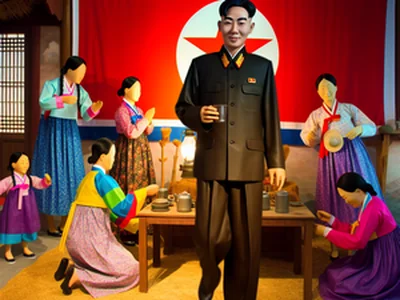
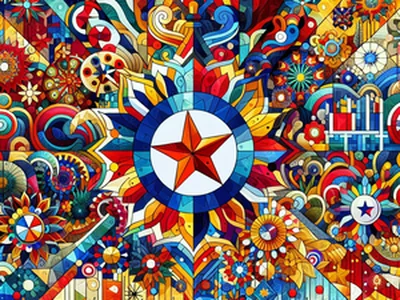
Symbols such as the red star and images of leaders are common, representing the state's power and ideology.
What Brings Joy
Community events, traditional festivals, and family gatherings are sources of joy.
Celebrations Joyful Traditions
National holidays and leader's birthdays are celebrated with parades and performances.
Cultural Calendar And Holidays
Key holidays include the Day of the Sun (Kim Il-sung's birthday) and the Day of the Shining Star (Kim Jong-il's birthday).
Additional Notes
Cultural expression is often used as a tool for political messaging and social cohesion.
Economic Context And Occupations
The economy is centrally planned, with most employment in state-run industries and agriculture.
Housing And Living Arrangements
Housing is provided by the state, with urban areas like Pyongyang offering better facilities than rural regions.
Nutrition And Dietary Norms
Diet is traditionally Korean, with rice, kimchi, and vegetables as staples, though food shortages can impact availability.
Interpretation Needs
Interpretation services are limited, often necessary for international interactions.
Interpreter Notes
Interpreters are state-trained, with a focus on maintaining ideological consistency.
Documentation Traditions
Documentation is controlled by the state, with limited access to foreign literature and media.
Interactions With Other Cultures
Interactions are limited, primarily occurring through diplomatic channels and select cultural exchanges.
Conflict Resolution Mechanisms
Conflict resolution is often handled through state mediation and diplomatic negotiations.
Cultural Exchange Programs
Cultural exchanges are rare, typically involving carefully selected participants.
Trade Relations
Trade is restricted due to international sanctions, with China being a primary partner.
Shared Artistic Projects
Collaborations are limited, often focusing on themes of peace and unity.
Intercultural Marriages
Intercultural marriages are rare and often subject to state scrutiny.
Shared Educational Initiatives
Educational exchanges are limited, with some cooperation in scientific research.
Youth Perspectives
Youth are expected to be loyal to the state, with limited exposure to foreign cultures.
Education Initiatives
State initiatives focus on ideological education and technical skills development.
Future Challenges
Challenges include economic development, technological advancement, and international relations.
Youth Employment Trends
Employment is typically in state-run industries, with limited opportunities for entrepreneurship.
Future Visions
The state's vision emphasizes self-reliance and technological advancement.
Youth Leadership Roles
Youth are encouraged to participate in state organizations and community activities.
Innovation And Startups
Innovation is state-driven, with limited private sector involvement.
Festivals And Celebrations
Festivals often celebrate national achievements and leaders, with performances and parades.
Traditional Medicine Practices
Traditional medicine is widely practiced, often integrated with modern healthcare.
Environmental Practices
Environmental practices focus on sustainability, though industrial activities can impact the environment.
Rituals
Rituals often involve ancestor worship and state ceremonies.
Rites Of Passage
Rites of passage include coming-of-age ceremonies and military service.
Culinary Traditions
Culinary traditions emphasize local ingredients, with dishes like kimchi and bulgogi.
Climate Adaptation Strategies
Strategies focus on agricultural resilience and infrastructure development.
Biodiversity Conservation
Conservation efforts are limited, with some focus on preserving natural landscapes.
Sustainable Tourism Practices
Tourism is state-controlled, with a focus on promoting cultural heritage.
Renewable Energy Use
Efforts are being made to increase renewable energy use, particularly hydroelectric power.
Community Involvement In Practices
Community involvement is encouraged in state-led environmental and cultural initiatives.
Environmental Education Programs
Programs focus on promoting awareness of environmental issues and sustainability.
Notable Figures
Figures such as Kim Il-sung and Kim Jong-il are central to cultural narratives.
Cultural Innovations
Innovations often align with state ideology, focusing on self-reliance and national pride.
Literary Works
Literature often serves as a tool for ideological education, with themes of patriotism and loyalty.
Architectural Styles
Architecture is characterized by monumental structures and socialist realism.
Scientific Contributions
Scientific efforts focus on self-reliance, with advancements in agriculture and technology.
Culinary Innovations
Culinary practices emphasize traditional Korean dishes adapted to local resources.
Global Influence
Global influence is limited, primarily through diplomatic and cultural exchanges.
Awards And Recognition
Recognition is often internal, with state awards for contributions to culture and society.
Modern Influences
Modern influences are limited by state control, with a focus on preserving traditional values.
Digital Presence
Digital presence is restricted, with limited access to the global internet.
Globalization Effects
Globalization effects are minimized by state policies, focusing on self-reliance.
Urbanization Effects
Urbanization is state-directed, with a focus on developing key cities like Pyongyang.
Technology Adoption
Technology adoption is state-driven, with a focus on strategic sectors.
Hybrid Cultural Forms
Hybrid forms are rare, with a focus on traditional and state-approved expressions.
Social Media Presence
Social media is state-controlled, with limited access to international platforms.
Challenges
Challenges include maintaining cultural identity amid economic and political pressures.
Preservation Efforts
Efforts focus on preserving traditional practices and promoting state-approved cultural narratives.
Cultural Artwork
Community Discussion
Further Reading
Explore credible external sources to deepen your understanding of Democratic Peoples Republic Of Korea culture.