
North Korea
East Asia Korean
North Korean culture is shaped by its political system, historical isolation, and emphasis on self-reliance.
Historical Context
North Korea's history is marked by Japanese occupation, the Korean War, and subsequent division of the Korean Peninsula.
Migration Patterns
Limited due to strict government control; some defection to South Korea and China.
Conflict And Resilience History
The Korean War and ongoing tensions with South Korea and the US have shaped a culture of resilience.
Diaspora Perspectives
North Korean defectors often face challenges integrating into new societies, carrying unique perspectives on freedom and identity.
Regional Variations
Cultural practices can vary slightly between urban and rural areas, though overall homogeneity is maintained.
Bridging Notes
Efforts to bridge cultural understanding focus on humanitarian aid and cultural exchanges, albeit limited.
Spiritual And Religious Practices
Officially atheist, with Juche ideology replacing traditional religious practices.
Beliefs And Worldview
Juche ideology promotes self-reliance, nationalism, and loyalty to the state.
Cultural Proverbs Sayings
Proverbs often emphasize hard work, loyalty, and perseverance.
Naming Conventions And Terms Of Address
Names typically consist of a family name followed by a given name; titles and honorifics are important in formal settings.
Health And Mental Health
Healthcare is state-provided, but resources are limited; mental health is often stigmatized.
Mental Health Views
Mental health issues are often not openly discussed, with a focus on physical health.
Traditional Healers
Traditional Korean medicine is practiced alongside modern medicine.
Gender Roles In Healthcare
Healthcare roles are traditionally gendered, with women often serving as caregivers.
Healthcare Barriers
Limited access to modern medical facilities and international aid restrictions.
Education And Learning Styles
Education is state-controlled, with a focus on ideological indoctrination and technical skills.
Learning Styles
Emphasis on rote memorization and collective learning.
Parental Engagement
Parents are expected to support state educational goals and participate in school activities.
Family And Social Structure
Family is central, with a strong emphasis on collectivism and loyalty to the state.
Discipline And Behavior
Discipline is strict, with a focus on conformity and respect for authority.
Authority Attitudes
Authority is respected and often unquestioned, with a hierarchical social structure.
Etiquette And Customs
Etiquette emphasizes respect, especially towards elders and authority figures.
Community Strengths Resilience
Strong community bonds and a shared sense of purpose contribute to resilience.
Art Music And Expression
Art and music are often used as tools for political expression and propaganda.
Cultural Symbols Motifs
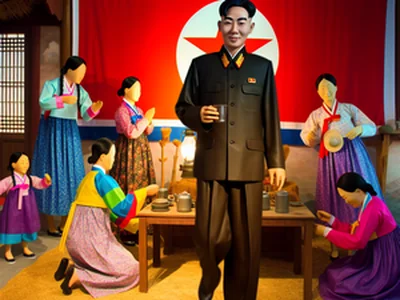
Symbols such as the red star and images of leaders are prevalent.
What Brings Joy
Community gatherings, traditional music, and dance bring joy.
Celebrations Joyful Traditions
National holidays and leader's birthdays are celebrated with parades and performances.
Cultural Calendar And Holidays
Major holidays include the Day of the Sun (Kim Il-sung's birthday) and the Day of the Shining Star (Kim Jong-il's birthday).
Additional Notes
Cultural expression is closely monitored and often serves state interests.
Economic Context And Occupations
Economy is centrally planned, with major industries including mining, agriculture, and military production.
Housing And Living Arrangements
Housing is provided by the state, often in apartment complexes.
Nutrition And Dietary Norms
Diet is traditionally rice-based, with kimchi and other fermented foods; food shortages are common.
Interpretation Needs
Interpretation is needed for non-Korean speakers, especially in diplomatic contexts.
Interpreter Notes
Interpreters must be cautious of political sensitivities.
Documentation Traditions
Documentation is often state-controlled, with limited access to external sources.
Interactions With Other Cultures
Limited due to isolationist policies; interactions mainly through diplomatic channels.
Conflict Resolution Mechanisms
State-controlled mechanisms, often involving military or diplomatic negotiations.
Cultural Exchange Programs
Rare, but occasionally occur with allied nations.
Trade Relations
Limited, primarily with China and Russia.
Shared Artistic Projects
Few, mainly state-approved collaborations.
Intercultural Marriages
Rare due to strict regulations.
Shared Educational Initiatives
Limited, often with a focus on ideological alignment.
Youth Perspectives
Youth are often indoctrinated with state ideology but may harbor desires for more openness.
Education Initiatives
Focus on STEM and ideological education.
Future Challenges
Economic development, international relations, and technological advancement.
Youth Employment Trends
State-assigned jobs, with limited career mobility.
Future Visions
Aiming for self-reliance and technological advancement.
Youth Leadership Roles
Youth are encouraged to participate in state organizations.
Innovation And Startups
Limited due to state control, but some focus on technology.
Festivals And Celebrations
State-organized events celebrating national achievements and leaders.
Traditional Medicine Practices
Korean traditional medicine is practiced alongside modern methods.
Environmental Practices
State-led initiatives focus on reforestation and pollution control.
Rituals
State rituals often involve homage to leaders.
Rites Of Passage
Military service is a significant rite of passage for young men.
Culinary Traditions
Kimchi, rice, and fermented foods are staples.
Climate Adaptation Strategies
Efforts include reforestation and agricultural adaptation.
Biodiversity Conservation
Limited, with some state-led conservation projects.
Sustainable Tourism Practices
Minimal, with tourism tightly controlled by the state.
Renewable Energy Use
Focus on hydroelectric power and solar energy.
Community Involvement In Practices
Community involvement is often state-directed.
Environmental Education Programs
State-led programs focus on conservation and sustainability.
Notable Figures
Kim Il-sung, Kim Jong-il, Kim Jong-un
Cultural Innovations
Juche ideology as a cultural framework.
Literary Works
State-approved literature often glorifies the regime.
Architectural Styles
Monumental architecture reflecting state power.
Scientific Contributions
Limited due to isolation, focus on military technology.
Culinary Innovations
Kimchi and other fermented foods.
Global Influence
Limited, primarily through political and military channels.
Awards And Recognition
State awards for loyalty and service.
Modern Influences
Limited due to isolation; some influence from China and Russia.
Digital Presence
State-controlled internet and media.
Globalization Effects
Minimal due to isolationist policies.
Urbanization Effects
Urban areas are more developed, with Pyongyang as the showcase city.
Technology Adoption
Focus on military and surveillance technology.
Hybrid Cultural Forms
Limited due to strict cultural controls.
Social Media Presence
State-controlled platforms; limited access to global social media.
Challenges
Isolation, economic sanctions, and limited access to global culture.
Preservation Efforts
State efforts focus on preserving ideological purity and cultural heritage.
Cultural Artwork
Community Discussion
Further Reading
Explore credible external sources to deepen your understanding of North Korea culture.