
Russian
Russia, Eastern Europe, and former Soviet Union territories RussianEnglish
The Russian culture is a rich and diverse heritage that spans over a thousand years, with a unique blend of Eastern European and Slavic influences.
Historical Context
Russia's history spans from the Kievan Rus' to the present day, with periods of Mongol and Polish rule, the rise of the Romanov dynasty, and the Soviet era.
Migration Patterns
Mass migrations from Eastern Europe, Central Asia, and Siberia have shaped Russia's demographics and cultural landscape.
Conflict And Resilience History
Russia has experienced numerous conflicts with neighboring countries, including the Mongol invasions, Polish-Lithuanian wars, and World War II, but has also demonstrated remarkable resilience and adaptability.
Diaspora Perspectives
Russian diasporas can be found in many parts of the world, including Eastern Europe, Central Asia, and the Americas, with significant communities in Germany, Israel, and the United States.
Regional Variations
Regional variations within Russia include differences between European and Asian cultures, as well as distinct traditions in Siberia, the Caucasus, and the Volga region.
Spiritual And Religious Practices
Orthodox Christianity is the dominant religion in Russia, with a significant minority of Muslims, Buddhists, and other faiths.
Beliefs And Worldview
Russians tend to value collectivism, community, and tradition, with a strong emphasis on family, education, and social responsibility.
Cultural Proverbs Sayings
Proverbs such as ' Zhizn' krasiva, da zhizn' krutka' ('Life is beautiful, but life is cruel') reflect the Russian outlook on life.
Naming Conventions And Terms Of Address
Russians typically use patronymic surnames (e.g., Ivanovich) and honorific titles such as 'Gospodin' or 'Doktor'.
Health And Mental Health
Mental health is a growing concern in Russia, with high rates of depression, anxiety, and substance abuse.
Mental Health Views
Russians tend to view mental illness as a personal failing rather than a medical condition.
Traditional Healers
Traditional healers such as babushkas (grandmothers) and folk medicine practitioners are still respected in rural areas.
Gender Roles In Healthcare
Women often play a significant role in healthcare, particularly in family planning and maternal health.
Healthcare Barriers
Barriers to healthcare access include lack of insurance, inadequate medical facilities, and cultural stigma around mental illness.
Education And Learning Styles
Russian education emphasizes rote memorization, discipline, and respect for authority.
Learning Styles
Students are expected to be passive recipients of knowledge rather than active learners.
Parental Engagement
Parents often play a significant role in their children's education, particularly in rural areas.
Family And Social Structure
Family is highly valued in Russian culture, with close-knit extended families and strong social bonds.
Discipline And Behavior
Discipline and respect for authority are emphasized from a young age, with corporal punishment still practiced in some schools.
Authority Attitudes
Russians tend to view authority figures as benevolent and wise, rather than oppressive or corrupt.
Etiquette And Customs
Etiquette is highly formalized in Russia, with strict rules around table manners, dress codes, and social hierarchy.
Community Strengths Resilience
Russian communities are known for their resilience and adaptability in the face of adversity.
Art Music And Expression
Russia has a rich cultural heritage in art, music, literature, and dance, with notable contributions from Tolstoy, Dostoevsky, Tchaikovsky, and Stravinsky.
Cultural Symbols Motifs
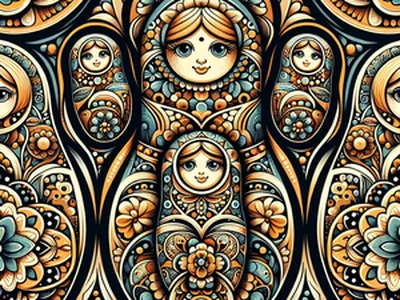
Cultural symbols include the double-headed eagle, the hammer and sickle, and the Matryoshka doll.
What Brings Joy
Russians often find joy in simple pleasures such as nature, family gatherings, and traditional folk music.
Celebrations Joyful Traditions
Traditional celebrations include Maslenitsa (Butter Week), Ivan Kupala Day, and New Year's Eve.
Cultural Calendar And Holidays
Russia has a unique calendar with many holidays and observances, including Orthodox Christmas and Easter.
Economic Context And Occupations
The Russian economy is primarily driven by oil and gas exports, with significant sectors in manufacturing, agriculture, and services.
Housing And Living Arrangements
Housing options range from high-rise apartments to rural dachas (summer homes), with a strong emphasis on communal living.
Nutrition And Dietary Norms
Traditional Russian cuisine emphasizes hearty meat stews, bread, and vegetables, with a focus on local and seasonal ingredients.
Interpretation Needs
Interpretation services are often required for English-speaking tourists and business travelers.
Interpreter Notes
Certified interpreters can be found in major cities, but may not always be available in rural areas.
Documentation Traditions
Documentation is highly formalized in Russia, with strict requirements around identification, registration, and paperwork.
Interactions With Other Cultures
Russians tend to view themselves as a distinct nation with a unique cultural identity, but also recognize the importance of international cooperation and exchange.
Conflict Resolution Mechanisms
Russia has a complex history of conflict resolution, including diplomatic efforts, military interventions, and economic sanctions.
Cultural Exchange Programs
Cultural exchange programs are increasingly popular between Russia and other countries, particularly in the fields of education, arts, and science.
Trade Relations
Russia's trade relations are shaped by its geographic location, economic interests, and historical relationships with neighboring countries.
Shared Artistic Projects
Russian artists and musicians have collaborated with international partners on numerous projects, including ballets, operas, and orchestral performances.
Intercultural Marriages
Intercultural marriages between Russians and people from other cultures are becoming more common, particularly in urban areas.
Shared Educational Initiatives
Russia has partnered with other countries to develop educational programs and exchange students in fields such as science, technology, engineering, and mathematics (STEM).
Youth Perspectives
Young Russians often express a desire for greater freedom, creativity, and individuality, but also value tradition and community.
Education Initiatives
Education initiatives focus on developing skills in STEM fields, entrepreneurship, and cultural heritage preservation.
Future Challenges
Russia faces challenges such as economic stagnation, demographic decline, and environmental degradation.
Youth Employment Trends
Youth employment trends are shaped by the country's economic context, with a growing emphasis on digital technologies and creative industries.
Future Visions
Russians envision a future with greater prosperity, social justice, and international cooperation.
Youth Leadership Roles
Young Russians are increasingly taking on leadership roles in politics, business, and civil society.
Innovation And Startups
Innovation and entrepreneurship are encouraged through government programs, incubators, and accelerators.
Festivals And Celebrations
Traditional festivals include Maslenitsa (Butter Week), Ivan Kupala Day, and New Year's Eve.
Traditional Medicine Practices
Traditional healers such as babushkas (grandmothers) and folk medicine practitioners are still respected in rural areas.
Environmental Practices
Russians tend to prioritize economic development over environmental concerns, but there is growing awareness of the need for sustainability and conservation.
Culinary Traditions
Traditional Russian cuisine emphasizes hearty meat stews, bread, and vegetables, with a focus on local and seasonal ingredients.
Climate Adaptation Strategies
Russia is vulnerable to climate change impacts such as permafrost thawing, sea-level rise, and extreme weather events.
Community Involvement In Practices
Community involvement in environmental practices is often limited due to lack of awareness, resources, or institutional support.
Environmental Education Programs
Environmental education programs are increasingly popular in schools and communities, focusing on topics such as climate change, conservation, and sustainable development.
Cultural Innovations
Russia has made significant contributions to literature, art, music, and science, including the development of ballet, opera, and orchestral music.
Architectural Styles
Russian architecture is characterized by grandiose styles such as Baroque, Rococo, and Neoclassicism.
Scientific Contributions
Russia has made significant contributions to science, including the discovery of DNA structure, the development of space exploration, and advances in mathematics and physics.
Culinary Innovations
Russian cuisine has been influenced by various cultures, resulting in unique dishes such as borscht, beef stroganoff, and pierogies.
Global Influence
Russia's cultural influence extends beyond its borders, with significant contributions to international relations, politics, and global governance.
Modern Influences
Modern influences on Russian culture include Westernization, globalization, and the rise of digital technologies.
Digital Presence
Russians are increasingly active online, with a growing presence on social media platforms such as VKontakte (VK) and Instagram.
Globalization Effects
Globalization has had a significant impact on Russia's economy, culture, and politics, leading to increased trade, cultural exchange, and international cooperation.
Urbanization Effects
Urbanization is transforming Russia's cities, leading to increased economic growth, cultural diversity, and social change.
Technology Adoption
Russia has made significant investments in technology development, including advancements in space exploration, artificial intelligence, and cybersecurity.
Hybrid Cultural Forms
Hybrid cultural forms are emerging in Russia, blending traditional and modern elements in fields such as music, art, and literature.
Social Media Presence
Social media platforms have become increasingly popular among Russians, with a growing presence on VKontakte (VK), Instagram, and Facebook.
Challenges
Russia faces challenges such as economic stagnation, demographic decline, environmental degradation, and cultural homogenization.
Preservation Efforts
Efforts are underway to preserve Russia's cultural heritage, including the restoration of historic buildings, museums, and cultural institutions.
Cultural Artwork
Community Discussion
Further Reading
Explore credible external sources to deepen your understanding of Russian culture.