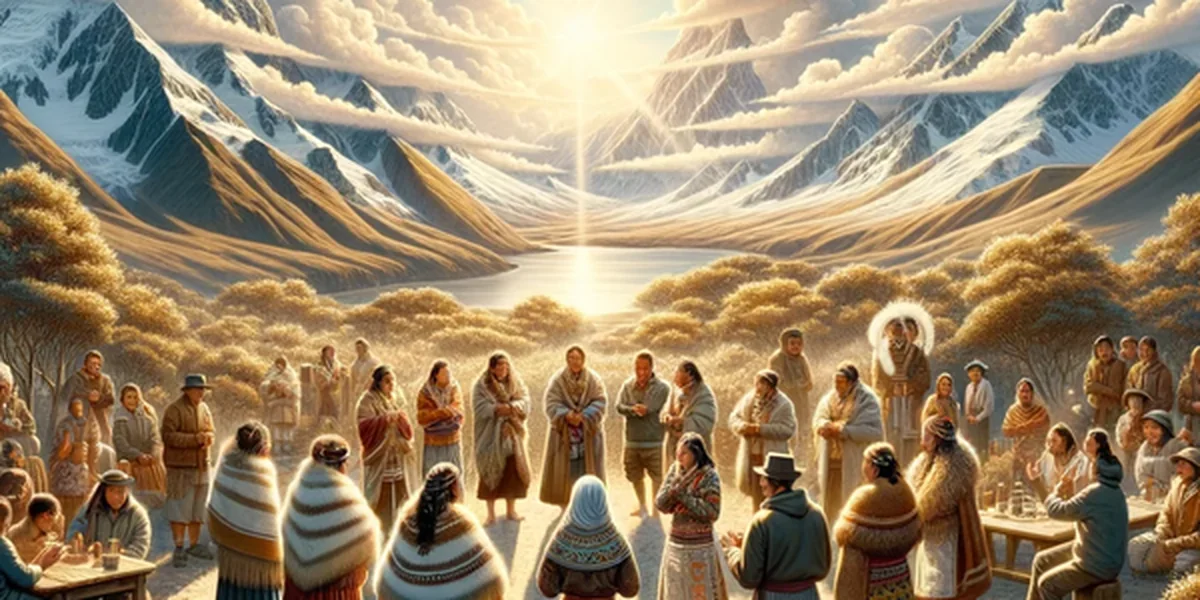
During polar night, Inuit communities live in darkness for months. The Winter Solstice marks the sun's return—a profound moment of hope, renewal, and celebration of light conquering darkness.
Thumbnail image shown on culture cards (recommended: 400x400px, square)
Hero Image
Large banner image for the culture detail page (recommended: 1200x600px,
wide)
📝 Core Information
Essential identifying information about the culture
The official name of the culture being enriched
Max 100 characters 35
A unique alphanumeric code representing the culture
Max 20 characters 4
A concise overview highlighting key attributes
Current Live Content
(331 chars)
Max 500 characters 331
Detailed description of defining characteristics, history, and contributions
Current Live Content
(389 chars)
The French Southern and Antarctic Lands (Terres australes et antarctiques françaises, TAAF) are a French overseas territory composed of several groups of islands in the southern Indian Ocean, along with a portion of the Antarctic continent. These territories include the Kerguelen Islands, Crozet Islands, Amsterdam and Saint-Paul Islands, and a section of Antarctica known as Adélie Land.
Max 5000 characters 389
Primary geographic area where the culture is located
Languages spoken by the culture
Empty
Cultures with historical, linguistic, or geographic ties
Empty
Alternative names for the culture
Empty
Broader cultural group this culture belongs to
📚 History
Historical context, migration patterns, and regional variations
Long history, roots, and identity development
Current Live Content
(221 chars)
The TAAF have been under French control since the early 20th century, although their discovery dates back to the 18th and 19th centuries. The territories were officially established as a French overseas territory in 1955.
Traditional and modern migration movements
Current Live Content
(162 chars)
There is no permanent population, as these territories are primarily used for scientific research. Temporary inhabitants include scientists and support personnel.
Challenges faced and resilience demonstrated
Current Live Content
(119 chars)
There have been no significant conflicts within the TAAF, as its primary use has been for peaceful scientific research.
Perspectives from diaspora communities
Current Live Content
(81 chars)
The territories do not have a diaspora due to the lack of a permanent population.
Variations in dialects and customs across regions
Current Live Content
(167 chars)
The main variations in the TAAF stem from the differing climates and ecosystems of its constituent areas, such as the sub-Antarctic islands and the Antarctic mainland.
Efforts to bridge cultural gaps
Current Live Content
(136 chars)
The TAAF connect France's interests in the Antarctic region with broader international scientific efforts and environmental stewardship.
🙏 Beliefs & Values
Spiritual practices, worldview, and cultural values
Religious practices and their influence on daily life
Current Live Content
(150 chars)
There are no indigenous spiritual or religious practices as the territories are uninhabited. Visiting researchers may practice their personal beliefs.
Cultural worldview and core beliefs
Current Live Content
(144 chars)
The focus is largely on environmental stewardship and scientific inquiry, reflecting the broader French commitment to research and conservation.
Important proverbs and sayings
Current Live Content
(93 chars)
As there is no indigenous population, there are no traditional proverbs specific to the TAAF.
Naming traditions and terms of address
Current Live Content
(92 chars)
French naming conventions and terms of address are used, reflecting the region's governance.
🏥 Health & Wellness
Health practices, mental health views, and healthcare access
Overall health practices and approaches
Current Live Content
(171 chars)
Healthcare services are limited to basic medical facilities for research staff. Emergency facilities and evacuations are coordinated with military and research operations.
Cultural perspectives on mental health
Current Live Content
(132 chars)
Mental health support is available for researchers, reflecting the challenging and isolated conditions of work in these territories.
Role of traditional healers in the community
Current Live Content
(83 chars)
There is no tradition of local healers due to the lack of an indigenous population.
How gender influences healthcare access and practices
Current Live Content
(108 chars)
Healthcare roles are filled by personnel from France, with no specific gender roles defined within the TAAF.
Barriers to accessing healthcare
Current Live Content
(100 chars)
The remote location and harsh climate can pose challenges to accessing advanced healthcare services.
🎓 Education
Learning styles, educational approaches, and parental engagement
Educational approaches and learning styles
Current Live Content
(144 chars)
Educational activities are not a primary focus, but research institutions often engage in educational outreach related to their scientific work.
Preferred learning methods and styles
Current Live Content
(86 chars)
Learning is research-oriented, with a focus on scientific inquiry and data collection.
How parents engage in children's education
Current Live Content
(88 chars)
Not applicable due to the absence of a civilian population and educational institutions.
👥 Community & Family
Social structure, family dynamics, and community values
How families and communities are organized
Current Live Content
(86 chars)
There is no permanent community structure due to the absence of a civilian population.
Approaches to discipline and behavioral expectations
Current Live Content
(122 chars)
Professional conduct is expected among researchers and support staff, adhering to scientific and institutional guidelines.
Cultural attitudes toward authority
Current Live Content
(76 chars)
Respect for scientific hierarchy and administrative governance is prevalent.
Social etiquette and important customs
Current Live Content
(98 chars)
Professional etiquette is observed, with an emphasis on cooperation and environmental stewardship.
Community strengths and resilience factors
Current Live Content
(109 chars)
The primary strength is the collaborative spirit and resilience of researchers working in extreme conditions.
🎨 Art & Expression
Artistic expression, music, celebrations, and cultural symbols
Artistic and musical traditions
Current Live Content
(128 chars)
Artistic expression is not a primary focus, but researchers may engage in photography and writing to document their experiences.
Important cultural symbols and motifs
Current Live Content
(112 chars)
The region's unique wildlife and landscapes are often symbolic of the TAAF's focus on conservation and research.
Sources of joy and happiness in the culture
Current Live Content
(136 chars)
The discovery and exploration of new scientific knowledge and the natural beauty of the region provide joy to its temporary inhabitants.
Celebratory traditions and joyful events
Current Live Content
(106 chars)
Celebrations are typically informal and related to milestones in research or international collaborations.
Important holidays and cultural calendar
Current Live Content
(83 chars)
French national holidays may be observed, but there are no specific local holidays.
Additional cultural expression notes
Current Live Content
(123 chars)
The TAAF are primarily focused on scientific and environmental endeavors, with cultural expression reflecting these themes.
🏘️ Service Access
Economic context, housing, and nutrition
Economic activities and common occupations
Current Live Content
(122 chars)
The economy is centered around scientific research and environmental management, with occupations largely in those fields.
Housing types and living arrangements
Current Live Content
(77 chars)
Temporary research stations provide housing for scientists and support staff.
Dietary practices and nutritional norms
Current Live Content
(112 chars)
Food supplies are shipped from France, and dietary norms are based on French cuisine and nutritional guidelines.
🗣️ Language Access
Interpretation needs and documentation traditions
Language interpretation requirements
Current Live Content
(120 chars)
French is the primary language, and translation services are minimal, given the professional nature of the interactions.
Important notes for interpreters
Current Live Content
(80 chars)
Interpreters are rarely needed, as all personnel are typically fluent in French.
How the culture documents its history and knowledge
Current Live Content
(86 chars)
Documentation is conducted in French, following scientific and governmental protocols.
🌍 Environmental Practices
Environmental practices, sustainability, and climate adaptation
Cultural festivals and celebrations
Current Live Content
(53 chars)
Informal celebrations related to research milestones.
Traditional medicine practices
Current Live Content
(88 chars)
There are no traditional medicine practices due to the lack of an indigenous population.
Environmental stewardship and practices
Current Live Content
(64 chars)
Strong focus on conservation and sustainable research practices.
Important cultural rituals
Current Live Content
(78 chars)
None specific to the region, but scientific protocols are rigorously followed.
Coming-of-age and life transition rituals
Current Live Content
(60 chars)
Not applicable due to the absence of a permanent population.
Food traditions and culinary practices
Current Live Content
(68 chars)
Food is based on French cuisine, adapted to the available resources.
Strategies for adapting to climate
Current Live Content
(68 chars)
Research on climate impacts and mitigation strategies is a priority.
Efforts to conserve biodiversity
Current Live Content
(65 chars)
Critical area for biodiversity conservation and scientific study.
Sustainable tourism initiatives
Current Live Content
(67 chars)
Tourism is minimal and highly regulated to protect the environment.
Use of renewable energy sources
Current Live Content
(63 chars)
Research stations increasingly employ renewable energy sources.
Community participation in practices
Current Live Content
(61 chars)
Community involvement is primarily scientific and regulatory.
Environmental education initiatives
Current Live Content
(71 chars)
Programs focus on research findings and global environmental awareness.
🏆 Cultural Contributions
Notable figures, innovations, and global influence
Important cultural figures and leaders
Current Live Content
(99 chars)
Primarily scientists and researchers who have contributed to understanding the region's ecosystems.
Cultural innovations and adaptations
Current Live Content
(70 chars)
Innovations are centered around environmental research and technology.
Important literary works and oral traditions
Current Live Content
(114 chars)
Few works are specific to the region but may include scientific publications and personal accounts of researchers.
Traditional and modern architectural styles
Current Live Content
(66 chars)
Functional research station designs adapted to harsh environments.
Scientific and technological contributions
Current Live Content
(72 chars)
Significant contributions to climate science, ecology, and biodiversity.
Innovative culinary practices
Current Live Content
(51 chars)
Adaptations of French cuisine to remote conditions.
Global cultural influence
Current Live Content
(97 chars)
The region's research contributes significantly to global environmental and scientific discourse.
Cultural awards and recognition
Current Live Content
(77 chars)
Recognition is primarily in scientific fields and environmental conservation.
💻 Modern Adaptations
Modern influences, technology adoption, and globalization
Modern cultural influences and changes
Current Live Content
(70 chars)
Influenced by global scientific advancements and environmental policy.
Digital and online cultural presence
Current Live Content
(82 chars)
Limited to scientific publications and digital documentation of research findings.
Impact of globalization on the culture
Current Live Content
(79 chars)
Global scientific collaboration is a key aspect of the region's modern context.
Impact of urbanization
Current Live Content
(55 chars)
Not applicable due to the absence of urban development.
Adoption of modern technology
Current Live Content
(77 chars)
High adoption of advanced research and environmental monitoring technologies.
Hybrid cultural expressions
Current Live Content
(68 chars)
Cultural elements are largely professional and scientific in nature.
Social media and online engagement
Current Live Content
(66 chars)
Minimal, focused on scientific institutions and research projects.
🤝 Intercultural Relations
Interactions with other cultures and exchange programs
How the culture interacts with others
Current Live Content
(85 chars)
Primarily through international scientific collaborations and environmental treaties.
Cultural approaches to resolving conflicts
Current Live Content
(74 chars)
Conflict resolution is handled through diplomatic and scientific channels.
Cultural exchange initiatives
Current Live Content
(92 chars)
There are scientific exchanges and collaborations, but no formal cultural exchange programs.
Trade relationships with other cultures
Current Live Content
(83 chars)
There are no significant trade relations due to the absence of a permanent economy.
Collaborative artistic initiatives
Current Live Content
(78 chars)
Artistic collaborations are rare and typically related to scientific outreach.
Cultural perspectives on intercultural marriage
Current Live Content
(57 chars)
Not applicable due to the lack of a permanent population.
Collaborative educational programs
Current Live Content
(86 chars)
Educational initiatives focus on scientific collaboration and environmental education.
🌟 Youth & Future
Youth perspectives, employment trends, and future visions
Perspectives and values of young people
Current Live Content
(56 chars)
Not applicable as there is no resident youth population.
Youth-focused education programs
Current Live Content
(86 chars)
Focused on promoting scientific research and understanding of the region's ecosystems.
Anticipated future challenges
Current Live Content
(89 chars)
Climate change and environmental protection are significant challenges facing the region.
Employment patterns among youth
Current Live Content
(65 chars)
Not applicable due to the absence of a resident youth population.
Cultural visions for the future
Current Live Content
(88 chars)
Continued emphasis on research and conservation, addressing global environmental issues.
Youth in leadership positions
Current Live Content
(65 chars)
Not applicable due to the absence of a resident youth population.
Youth entrepreneurship and innovation
Current Live Content
(79 chars)
Innovation is centered around scientific research and environmental technology.
🛡️ Challenges & Preservation
Cultural challenges and preservation efforts
Current cultural challenges
Current Live Content
(65 chars)
Environmental protection and climate change are major challenges.
Efforts to preserve cultural heritage
Current Live Content
(78 chars)
Efforts focus on biodiversity conservation and maintaining research integrity.