
Mughals
Indian subcontinent, primarily modern-day India, Pakistan, and Bangladesh. PersianUrduHindiTurkish
The Mughal culture, originating from Central Asia, significantly influenced the Indian subcontinent from the 16th to the 19th century, known for its rich contributions to art, architecture, and administration.
Historical Context
The Mughal Empire was established in 1526 by Babur, a descendant of Timur and Genghis Khan. It expanded to cover much of the Indian subcontinent, reaching its zenith under Akbar, Jahangir, and Shah Jahan. The empire is known for its administrative innovations and cultural achievements.
Migration Patterns
The Mughals migrated from Central Asia into the Indian subcontinent, bringing with them a blend of Persian and Central Asian cultural elements.
Conflict And Resilience History
The Mughals faced numerous conflicts, including battles with regional kingdoms and European colonial powers. Despite these challenges, they maintained a strong cultural and political presence until the 19th century.
Diaspora Perspectives
The Mughal influence extended beyond the Indian subcontinent, impacting regions such as Central Asia and the Middle East through trade and cultural exchange.
Regional Variations
Mughal culture adapted to local traditions in different regions, leading to variations in art, architecture, and language.
Bridging Notes
The Mughals served as a bridge between Persian and Indian cultures, fostering a unique synthesis that enriched the cultural landscape of South Asia.
Spiritual And Religious Practices
The Mughals practiced Islam, with a strong emphasis on Sufism. They were known for their religious tolerance, particularly under Akbar, who promoted a syncretic religion called Din-i Ilahi.
Beliefs And Worldview
The Mughals believed in a centralized, divine-right monarchy, with the emperor as the supreme ruler. Their worldview was influenced by Islamic teachings and Persian culture.
Cultural Proverbs Sayings
Mughal proverbs often reflected themes of wisdom, justice, and the transient nature of life, drawing from Persian and Indian literary traditions.
Naming Conventions And Terms Of Address
Mughal naming conventions often included titles such as 'Shah' and 'Begum', reflecting Persian influences. Terms of address were formal and hierarchical, reflecting social status.
Health And Mental Health
Mughal healthcare was influenced by Unani medicine, which combined Greek, Persian, and Indian medical knowledge. Hospitals and clinics were established in major cities.
Mental Health Views
Mental health was understood through the lens of humoral theory, with treatments focusing on balancing bodily fluids.
Traditional Healers
Hakims, or traditional healers, played a significant role in Mughal healthcare, using herbal remedies and holistic approaches.
Gender Roles In Healthcare
Healthcare roles were predominantly male, though women of the royal family sometimes practiced medicine within the harem.
Healthcare Barriers
Access to healthcare was limited by social status and geography, with rural areas having less access to medical facilities.
Education And Learning Styles
Education in Mughal culture emphasized literature, poetry, and the sciences, with a strong focus on Persian and Arabic languages.
Learning Styles
Learning was often conducted in madrasas and through private tutors, focusing on memorization and oral recitation.
Parental Engagement
Education was highly valued, with royal and noble families investing in the education of their children, particularly in the arts and sciences.
Family And Social Structure
Mughal society was hierarchical, with a strong emphasis on family lineage and loyalty to the emperor. Extended families lived together, often in large compounds.
Discipline And Behavior
Discipline was strict, with a focus on respect for elders and adherence to social norms. Public behavior was guided by court etiquette and Islamic principles.
Authority Attitudes
Authority was centralized, with the emperor holding absolute power. Loyalty to the emperor and the state was paramount.
Etiquette And Customs
Mughal etiquette was influenced by Persian court customs, emphasizing politeness, hospitality, and elaborate ceremonies.
Community Strengths Resilience
The Mughal community was resilient, adapting to political and social changes while maintaining cultural traditions and artistic expressions.
Art Music And Expression
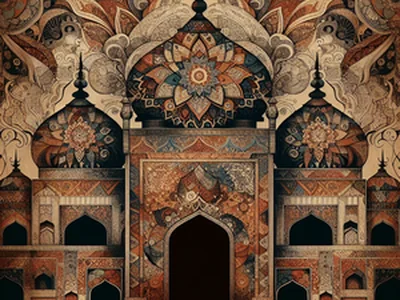
Mughal art is renowned for its miniature paintings, intricate architecture, and gardens. Music was an integral part of court life, with influences from Persian and Indian traditions.
Cultural Symbols Motifs
Common motifs included floral patterns, geometric designs, and calligraphy, reflecting Islamic and Persian influences.
What Brings Joy
Art, poetry, and music were central to Mughal culture, providing joy and a sense of identity. Festivals and court celebrations were also significant.
Celebrations Joyful Traditions
The Mughals celebrated festivals like Eid, Nowruz, and Diwali, often with grand feasts and public displays of art and music.
Cultural Calendar And Holidays
The Mughal calendar included Islamic holidays, as well as regional festivals, reflecting their cultural diversity.
Additional Notes
Mughal expression was characterized by a synthesis of diverse cultural elements, creating a rich tapestry of artistic and cultural achievements.
Economic Context And Occupations
The Mughal economy was agrarian, with a strong emphasis on trade and commerce. Occupations ranged from agriculture to skilled craftsmanship and administration.
Housing And Living Arrangements
Housing varied by social status, with the elite living in grand palaces and the common people in modest homes. Urban planning was advanced, with cities featuring gardens and public buildings.
Nutrition And Dietary Norms
Mughal cuisine was rich and diverse, incorporating Persian, Indian, and Central Asian influences. Meals were elaborate, often featuring rice, meats, and spices.
Interpretation Needs
Persian was the court language, requiring interpretation for those who spoke regional languages. Multilingualism was common among the elite.
Interpreter Notes
Interpreters played a crucial role in administration and diplomacy, facilitating communication between different linguistic groups.
Documentation Traditions
Documentation was meticulous, with records kept in Persian. Calligraphy was highly valued, and official documents were often beautifully decorated.
Interactions With Other Cultures
The Mughals engaged in extensive cultural exchanges with Persia, Central Asia, and Europe, influencing and being influenced by these regions.
Conflict Resolution Mechanisms
Diplomacy and marriage alliances were common strategies for conflict resolution, alongside military campaigns when necessary.
Cultural Exchange Programs
Cultural exchanges were facilitated through trade, diplomacy, and the movement of artists and scholars across regions.
Trade Relations
The Mughals maintained robust trade relations with Central Asia, the Middle East, and Europe, exporting textiles, spices, and precious stones.
Shared Artistic Projects
Collaborations in art and architecture were common, with Persian and Indian artisans working together on projects like the Taj Mahal.
Intercultural Marriages
Intercultural marriages were used to strengthen alliances, with Mughal emperors often marrying into Rajput and Persian families.
Shared Educational Initiatives
Educational exchanges occurred through the establishment of madrasas and the patronage of scholars from different regions.
Youth Perspectives
Mughal youth were often groomed for leadership roles, with a focus on education and training in governance and the arts.
Education Initiatives
Education was prioritized, with initiatives to build madrasas and libraries, promoting literacy and learning.
Future Challenges
The decline of the Mughal Empire posed challenges for future generations, including political instability and colonial pressures.
Youth Employment Trends
Youth were employed in various sectors, including administration, the military, and the arts, reflecting the diverse opportunities within the empire.
Future Visions
The Mughals envisioned a prosperous and culturally rich empire, with continued expansion and consolidation of their rule.
Youth Leadership Roles
Youth from noble families were often given leadership roles early, preparing them for future responsibilities in governance and administration.
Innovation And Startups
Innovation was encouraged, particularly in the arts and sciences, with young talent often supported by royal patronage.
Festivals And Celebrations
Mughal festivals were grand affairs, blending Islamic and local traditions, often marked by elaborate feasts and public celebrations.
Traditional Medicine Practices
Traditional medicine was practiced widely, with a focus on herbal remedies and Unani medicine, integrating Greek, Persian, and Indian knowledge.
Environmental Practices
The Mughals were known for their gardens and landscaping, reflecting a deep appreciation for nature and aesthetics.
Rituals
Rituals were an integral part of Mughal life, including religious ceremonies, court rituals, and public celebrations.
Rites Of Passage
Rites of passage, such as birth, marriage, and death, were marked by elaborate ceremonies, reflecting Islamic and local customs.
Culinary Traditions
Mughal cuisine was a fusion of Persian, Indian, and Central Asian influences, known for its rich flavors and use of spices.
Climate Adaptation Strategies
Architectural innovations, such as the use of water features and gardens, helped mitigate the harsh climate of the Indian subcontinent.
Biodiversity Conservation
Mughal gardens and hunting reserves played a role in conserving biodiversity, reflecting an early understanding of environmental stewardship.
Sustainable Tourism Practices
While not a formal concept at the time, the grandeur of Mughal architecture attracted visitors, laying early foundations for tourism.
Renewable Energy Use
The Mughals utilized water and wind for mechanical purposes, though not in the modern sense of renewable energy.
Community Involvement In Practices
Community involvement was encouraged in festivals and public works, fostering a sense of shared cultural identity.
Environmental Education Programs
Education about the environment was informal, often passed down through traditions and practices related to agriculture and gardening.
Notable Figures
Notable figures include Akbar the Great, Shah Jahan, and Aurangzeb, each contributing to the empire's cultural and political legacy.
Cultural Innovations
The Mughals introduced innovations in art, architecture, and administration, blending Persian and Indian elements to create a unique cultural identity.
Literary Works
Mughal literature flourished, with works in Persian and Urdu, including poetry, history, and religious texts.
Architectural Styles
Mughal architecture is renowned for its grandeur and beauty, exemplified by the Taj Mahal, Red Fort, and Humayun's Tomb.
Scientific Contributions
The Mughals made advances in astronomy, mathematics, and medicine, often drawing on Persian and Indian knowledge.
Culinary Innovations
Mughal cuisine introduced rich, flavorful dishes that remain popular today, such as biryani and kebabs.
Global Influence
The Mughal Empire's cultural and artistic achievements had a lasting impact on South Asia and influenced global perceptions of Indian culture.
Awards And Recognition
While formal awards were not common, recognition came through patronage and the commissioning of grand projects and artworks.
Modern Influences
Mughal culture continues to influence modern South Asian art, architecture, and cuisine, with its legacy celebrated in contemporary media.
Digital Presence
Mughal history and culture are widely represented online, with digital archives and virtual tours of historical sites.
Globalization Effects
Globalization has led to a renewed interest in Mughal culture, with its art and architecture gaining international recognition.
Urbanization Effects
Urbanization has impacted the preservation of Mughal heritage sites, leading to efforts to balance development with conservation.
Technology Adoption
Technology has facilitated the study and preservation of Mughal culture, with digital tools aiding in research and restoration.
Hybrid Cultural Forms
Contemporary South Asian culture often blends Mughal elements with modern influences, creating hybrid forms in art and fashion.
Social Media Presence
Social media platforms feature Mughal-inspired content, promoting cultural appreciation and awareness among global audiences.
Challenges
Preserving Mughal heritage in the face of urbanization and environmental degradation is a significant challenge.
Preservation Efforts
Efforts to preserve Mughal culture include restoration projects, heritage conservation initiatives, and educational programs.
Cultural Artwork
Community Discussion
Further Reading
Explore credible external sources to deepen your understanding of Mughals culture.