
German Speaking Swiss
Central Europe, primarily in the German-speaking regions of Switzerland. GermanSwiss German dialects
The German-speaking Swiss culture is characterized by a blend of traditional Swiss values and modern European influences, with a strong emphasis on community, precision, and neutrality.
Historical Context
The German-speaking Swiss culture has evolved over centuries, influenced by the Alemannic tribes and later by the Holy Roman Empire. It has maintained a distinct identity through Switzerland's neutrality and confederation.
Migration Patterns
Historically, there has been limited migration due to Switzerland's mountainous terrain, but modern times have seen increased immigration from neighboring countries and beyond.
Conflict And Resilience History
Switzerland's policy of neutrality has kept it out of major conflicts, allowing the culture to develop resilience through diplomacy and internal cohesion.
Diaspora Perspectives
The Swiss diaspora maintains strong ties to their homeland, often participating in cultural events and maintaining Swiss traditions abroad.
Regional Variations
There are notable differences in dialects and customs between regions such as Zurich, Bern, and Basel.
Bridging Notes
Efforts to bridge cultural differences focus on promoting multilingualism and intercultural understanding within Switzerland.
Spiritual And Religious Practices
Predominantly Christian, with both Protestant and Catholic communities. There is also a growing presence of other religions due to immigration.
Beliefs And Worldview
The culture values neutrality, direct democracy, and a strong sense of community and environmental stewardship.
Cultural Proverbs Sayings
Common sayings emphasize thrift, hard work, and reliability, such as 'Ehrlich währt am längsten' (Honesty lasts the longest).
Naming Conventions And Terms Of Address
Formal titles are often used in professional settings, while first names are common among friends and family. Surnames often reflect geographic origins or professions.
Health And Mental Health
The Swiss healthcare system is highly regarded, with a focus on preventative care and mental health awareness.
Mental Health Views
Mental health is increasingly recognized as important, with efforts to reduce stigma and improve access to services.
Traditional Healers
While modern medicine is predominant, some traditional remedies and homeopathic treatments are still used.
Gender Roles In Healthcare
Healthcare roles are becoming more gender-balanced, though women traditionally took on caregiving roles.
Healthcare Barriers
Language can be a barrier for non-German speakers, though translation services are improving.
Education And Learning Styles
Education is highly valued, with a strong emphasis on multilingualism and vocational training.
Learning Styles
A mix of theoretical and practical learning is emphasized, with a strong focus on apprenticeships.
Parental Engagement
Parents are actively involved in their children's education, often participating in school activities and decision-making.
Family And Social Structure
Family is central, with a strong emphasis on nuclear and extended family ties. Community involvement is also highly valued.
Discipline And Behavior
Discipline is often gentle but firm, with an emphasis on teaching responsibility and respect.
Authority Attitudes
There is a respect for authority, but also a strong tradition of questioning and direct democracy.
Etiquette And Customs
Punctuality, politeness, and respect for privacy are important. Greetings often include a handshake.
Community Strengths Resilience
The community is known for its resilience, built on a foundation of cooperation, neutrality, and a strong social safety net.
Art Music And Expression
The culture is rich in traditional music, yodeling, and folk art, alongside contemporary arts and music festivals.
Cultural Symbols Motifs
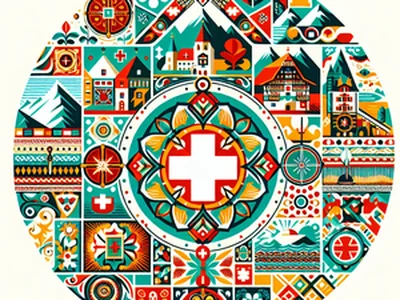
Symbols like the Swiss cross, edelweiss flower, and traditional costumes are prevalent.
What Brings Joy
Outdoor activities, community festivals, and family gatherings are sources of joy.
Celebrations Joyful Traditions
Festivals such as Fasnacht (Carnival) and Sechseläuten are celebrated with enthusiasm.
Cultural Calendar And Holidays
National Day on August 1st, Christmas, and Easter are major holidays.
Additional Notes
The culture places a high value on craftsmanship and quality in artistic expressions.
Economic Context And Occupations
The economy is diverse, with strengths in finance, pharmaceuticals, and technology.
Housing And Living Arrangements
Housing is often in well-planned urban areas, with a mix of apartments and single-family homes.
Nutrition And Dietary Norms
The diet is varied, with a focus on dairy products, meats, and seasonal vegetables. Fondue and raclette are popular traditional dishes.
Interpretation Needs
Interpretation services are often needed for non-German speakers, especially in healthcare and legal settings.
Interpreter Notes
Interpreters should be aware of regional dialects and cultural nuances.
Documentation Traditions
Official documents are typically in Standard German, with some regional variations in informal contexts.
Interactions With Other Cultures
There is a strong tradition of multiculturalism and multilingualism, with positive interactions with neighboring cultures.
Conflict Resolution Mechanisms
Mediation and consensus-building are preferred methods of conflict resolution.
Cultural Exchange Programs
Switzerland participates in numerous cultural exchange programs, promoting understanding and cooperation.
Trade Relations
Switzerland has strong trade relations with the EU and other global partners.
Shared Artistic Projects
Collaborations in art and music are common, often involving cross-border festivals.
Intercultural Marriages
Intercultural marriages are increasingly common, reflecting the diverse population.
Shared Educational Initiatives
Educational exchanges and joint research projects are encouraged, particularly within Europe.
Youth Perspectives
Youth are increasingly global-minded, valuing sustainability and innovation.
Education Initiatives
There is a strong focus on STEM education and vocational training.
Future Challenges
Balancing tradition with modernization and addressing climate change are key challenges.
Youth Employment Trends
Youth employment is strong, with opportunities in technology and finance.
Future Visions
A vision of a sustainable, inclusive society with a high quality of life.
Youth Leadership Roles
Youth are encouraged to take leadership roles in community and environmental initiatives.
Innovation And Startups
Switzerland is a hub for startups, particularly in tech and biotech sectors.
Festivals And Celebrations
Traditional festivals like Fasnacht and modern music festivals are celebrated widely.
Traditional Medicine Practices
Homeopathy and herbal remedies are used alongside modern medicine.
Environmental Practices
Strong emphasis on recycling, conservation, and sustainable living.
Rituals
Rituals often revolve around seasonal changes and agricultural cycles.
Rites Of Passage
Rites such as coming-of-age ceremonies are celebrated within families.
Culinary Traditions
Dishes like fondue, raclette, and rösti are staples, reflecting a rich culinary heritage.
Climate Adaptation Strategies
Innovative approaches to climate change include renewable energy and sustainable agriculture.
Biodiversity Conservation
Efforts focus on preserving alpine ecosystems and native species.
Sustainable Tourism Practices
Tourism emphasizes eco-friendly practices and preserving natural beauty.
Renewable Energy Use
Switzerland invests heavily in hydroelectric and solar power.
Community Involvement In Practices
Communities are actively involved in environmental initiatives and decision-making.
Environmental Education Programs
Schools incorporate environmental education into their curricula, promoting awareness from a young age.
Notable Figures
Figures like Albert Einstein and Carl Jung have roots in Swiss culture.
Cultural Innovations
Innovations in watchmaking and precision engineering are notable.
Literary Works
Authors like Hermann Hesse and Max Frisch have contributed to world literature.
Architectural Styles
Swiss architecture is known for its modernist and sustainable designs.
Scientific Contributions
Contributions in physics, chemistry, and medicine are significant, with several Nobel laureates.
Culinary Innovations
Innovations in chocolate and cheese production are world-renowned.
Global Influence
Switzerland's influence is seen in finance, diplomacy, and cultural exports.
Awards And Recognition
Swiss individuals and institutions have received numerous international awards, including Nobel Prizes.
Modern Influences
Globalization has brought diverse influences, blending traditional and modern elements.
Digital Presence
High internet penetration and digital innovation are hallmarks of modern Swiss society.
Globalization Effects
Increased cultural exchange and economic integration with the EU and beyond.
Urbanization Effects
Urban areas are growing, with a focus on sustainable development.
Technology Adoption
Switzerland is a leader in technology adoption, particularly in fintech and biotech.
Hybrid Cultural Forms
Cultural forms blend traditional Swiss elements with global trends.
Social Media Presence
Social media is widely used for communication and cultural exchange.
Challenges
Balancing tradition with modernity and managing immigration are ongoing challenges.
Preservation Efforts
Efforts focus on preserving linguistic diversity and traditional crafts.
Cultural Artwork
Community Discussion
Further Reading
Explore credible external sources to deepen your understanding of German Speaking Swiss culture.