
Dominican Republic
Caribbean Spanish
The Dominican Republic is known for its vibrant culture, which is a blend of Taino, African, and Spanish influences. It is famous for its music, dance, and rich traditions.
Historical Context
The Dominican Republic's history is marked by the arrival of Christopher Columbus in 1492, Spanish colonization, and the influence of African slaves. It gained independence in 1844.
Migration Patterns
The country has experienced significant emigration to the United States and Spain, while also hosting Haitian immigrants.
Conflict And Resilience History
The Dominican Republic has faced political turmoil, including the Trujillo dictatorship, but has shown resilience through democratic reforms.
Diaspora Perspectives
The Dominican diaspora maintains strong cultural ties, often participating in cultural festivals and remittances.
Regional Variations
Cultural practices vary between urban and rural areas, with distinct differences in music and dance styles.
Bridging Notes
Efforts to bridge cultural gaps focus on promoting understanding and appreciation of the diverse influences that shape Dominican culture.
Spiritual And Religious Practices
Catholicism is predominant, but there is also a presence of Protestantism and syncretic practices like Vodou.
Beliefs And Worldview
Dominicans value family, community, and hospitality. There is a strong belief in destiny and the influence of spiritual forces.
Cultural Proverbs Sayings
Common sayings reflect values of resilience and optimism, such as 'El que persevera triunfa' (He who perseveres triumphs).
Naming Conventions And Terms Of Address
Naming often includes both parents' surnames. Formal titles are used in professional settings, while informal terms are common among friends and family.
Health And Mental Health
Healthcare access varies, with urban areas having better facilities. Mental health is often stigmatized but is gaining attention.
Mental Health Views
Mental health issues are sometimes seen as personal weaknesses, but awareness is increasing.
Traditional Healers
Curanderos and herbalists play a role in traditional medicine, often using natural remedies.
Gender Roles In Healthcare
Women are primary caregivers, but there is a growing presence of women in professional healthcare roles.
Healthcare Barriers
Barriers include economic constraints, geographic access, and limited health education.
Education And Learning Styles
Education is valued, with a focus on rote learning. There is an emphasis on respect for teachers.
Learning Styles
Visual and auditory learning are common, with a preference for direct instruction.
Parental Engagement
Parents are involved in their children's education, often supporting extracurricular activities and homework.
Family And Social Structure
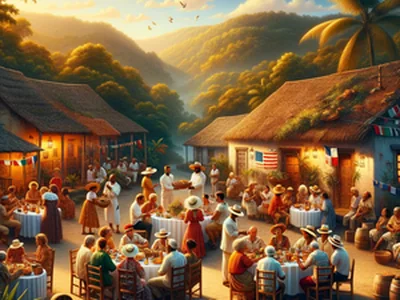
Family is central, often extending to include close friends. Social gatherings are frequent.
Discipline And Behavior
Discipline is often strict, with respect for elders emphasized.
Authority Attitudes
There is respect for authority figures, but also a strong sense of community leadership.
Etiquette And Customs
Greetings are warm, often involving hugs or kisses on the cheek. Punctuality is flexible.
Community Strengths Resilience
Communities are resilient, often coming together to support one another in times of need.
Art Music And Expression
Merengue and bachata are popular music genres. Art often reflects historical and cultural themes.
Cultural Symbols Motifs
Symbols like the palm tree and the Taino sun are common in art and crafts.
What Brings Joy
Music, dance, and family gatherings are sources of joy.
Celebrations Joyful Traditions
Carnival and Independence Day are major celebrations, featuring parades and traditional music.
Cultural Calendar And Holidays
Important holidays include Christmas, Easter, and the Feast of Our Lady of Altagracia.
Additional Notes
Dominican culture is vibrant and expressive, with a strong emphasis on community and celebration.
Economic Context And Occupations
The economy is diverse, with tourism, agriculture, and services as key sectors.
Housing And Living Arrangements
Housing varies from urban apartments to rural homes, often with extended families living together.
Nutrition And Dietary Norms
The diet includes rice, beans, plantains, and meat, with a focus on fresh ingredients.
Interpretation Needs
Spanish is the primary language, but English interpretation may be needed in tourist areas.
Interpreter Notes
Interpreters should be aware of regional dialects and cultural nuances.
Documentation Traditions
Oral traditions are strong, but written documentation is used in formal settings.
Interactions With Other Cultures
The Dominican Republic has strong cultural ties with other Caribbean nations and the United States.
Conflict Resolution Mechanisms
Community mediation and dialogue are common methods for resolving conflicts.
Cultural Exchange Programs
There are numerous cultural exchange programs with countries like the United States and Spain.
Trade Relations
The country has trade agreements with the United States, European Union, and other Caribbean nations.
Shared Artistic Projects
Collaborations in music and art are common with neighboring countries.
Intercultural Marriages
Intercultural marriages are increasing, particularly with Haitian and American partners.
Shared Educational Initiatives
Educational partnerships exist with international universities and organizations.
Youth Perspectives
Youth are optimistic about the future, valuing education and technology.
Education Initiatives
There are initiatives to improve education access and quality, focusing on technology integration.
Future Challenges
Challenges include economic opportunities and environmental sustainability.
Youth Employment Trends
Youth employment is growing in sectors like technology and tourism.
Future Visions
The vision for the future includes sustainable development and increased global integration.
Youth Leadership Roles
Youth are increasingly taking on leadership roles in community and political organizations.
Innovation And Startups
There is a growing startup culture, particularly in technology and creative industries.
Festivals And Celebrations
Festivals like Carnival and Merengue Festival are celebrated with music and dance.
Traditional Medicine Practices
Herbal remedies and spiritual healing are part of traditional medicine.
Environmental Practices
Efforts are being made to promote recycling and conservation.
Rituals
Rituals often involve music and dance, particularly in religious and cultural celebrations.
Rites Of Passage
Rites of passage include quinceañeras and religious confirmations.
Culinary Traditions
Culinary traditions include dishes like sancocho and mangu, often shared in communal settings.
Climate Adaptation Strategies
Strategies include reforestation and sustainable agriculture practices.
Biodiversity Conservation
Conservation efforts focus on protecting the diverse flora and fauna.
Sustainable Tourism Practices
Sustainable tourism is promoted to protect natural resources and cultural heritage.
Renewable Energy Use
There is a growing use of solar and wind energy.
Community Involvement In Practices
Communities are actively involved in environmental and cultural preservation initiatives.
Environmental Education Programs
Programs aim to educate the public about environmental conservation and sustainability.
Notable Figures
Notable figures include Oscar de la Renta, Juan Luis Guerra, and Julia Alvarez.
Cultural Innovations
Innovations include the development of merengue and bachata music styles.
Literary Works
Literary works by authors like Julia Alvarez and Junot Díaz explore themes of identity and migration.
Architectural Styles
Colonial architecture is prominent, particularly in the Zona Colonial of Santo Domingo.
Scientific Contributions
Contributions in fields like medicine and environmental science are emerging.
Culinary Innovations
Fusion cuisine is growing, blending traditional Dominican flavors with international influences.
Global Influence
Dominican culture has a global influence, particularly in music and dance.
Awards And Recognition
Dominican artists and writers have received international awards and recognition.
Modern Influences
Globalization has brought influences from American and European cultures.
Digital Presence
There is a strong digital presence, with widespread use of social media and online platforms.
Globalization Effects
Globalization has led to cultural exchanges and economic opportunities.
Urbanization Effects
Urbanization is leading to changes in lifestyle and cultural practices.
Technology Adoption
Technology adoption is high, particularly among the youth.
Hybrid Cultural Forms
Hybrid cultural forms are emerging, blending traditional and modern elements.
Social Media Presence
Social media is widely used for communication and cultural expression.
Challenges
Challenges include preserving cultural heritage amidst globalization and addressing social inequalities.
Preservation Efforts
Efforts are underway to preserve cultural sites and promote traditional arts and crafts.
Cultural Artwork
Community Discussion
Further Reading
Explore credible external sources to deepen your understanding of Dominican Republic culture.